Live Wild & Free
The story of Maditasky, Rangey & Madi
 by
Jacqueline Herbst
· · Updated · 4 min read
by
Jacqueline Herbst
· · Updated · 4 min read

He recalled being taken around the country as a child by his father, an avid wildlife photographer, visiting one game reserve after another. At the time, he and his brother had not appreciated the experience, but in later years recognised it as formative. While his brother went on to develop a talent for wildlife art, they both developed a deep love for the African bush.
Mark said his wife, Diane, shared this passion, and it was only natural that they introduced their daughters, Skye and Tayla, to the same lifestyle. The girls, he said, developed their own appreciation for the bush over time.
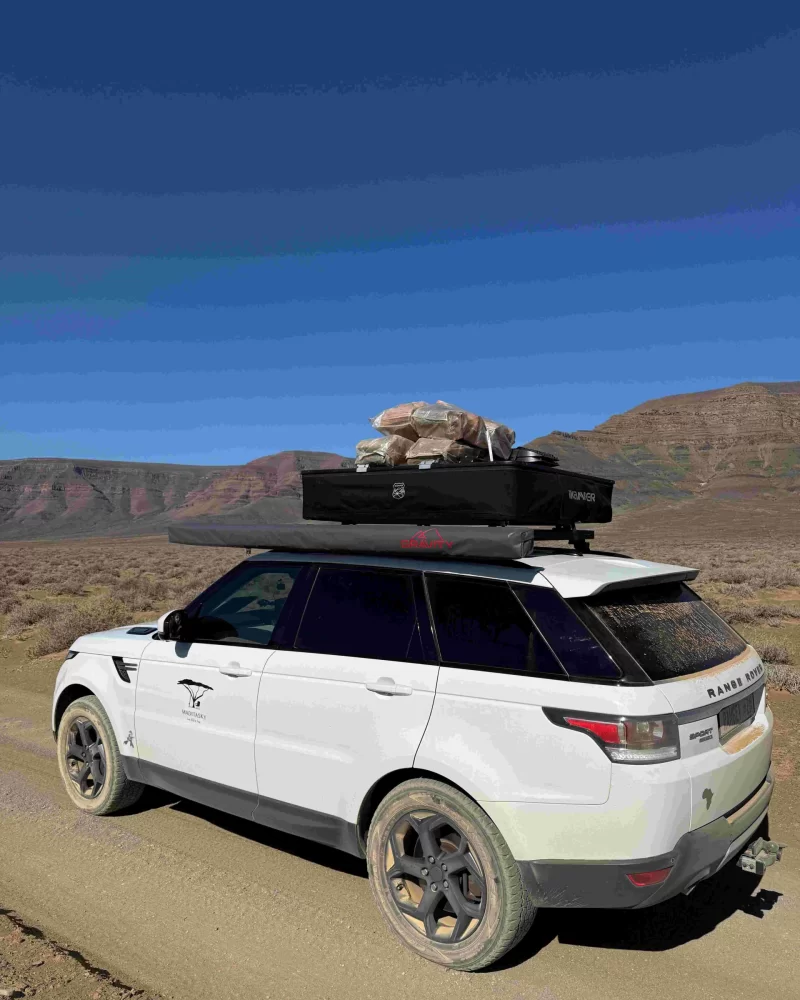
After their daughters left home to pursue opportunities abroad, they decided to travel more extensively through South Africa and into neighbouring countries, including Botswana, Zimbabwe and Namibia. Having spent time in upmarket lodges, they began looking for a more rustic and self-sufficient travel experience.
This led to a decision between a rooftop tent and an off-road trailer. Mark spent months researching the options, weighing the pros and cons. He eventually chose a rooftop tent, noting that while it offered flexibility, it also required packing up camp entirely if the vehicle needed to be moved. Despite the drawback, he preferred it to towing a trailer, which he had done extensively in earlier years while transporting water skiing and wakeboarding equipment.
Around this time, his 2015 Range Rover Sport required a new engine. He decided that the investment justified keeping the vehicle, which he described as both comfortable and capable for long-distance and off-road touring. As a long-time Land Rover enthusiast, he had no interest in changing brands.
With Diane’s support, he selected an iKamper X-Cover rooftop tent, citing its relative light weight and practical design. The tent also allowed for additional roof storage, which was necessary to carry surfboards and a stand-up paddleboard.
However, an initial attempt to install a roof rack was unsuccessful due to weight restrictions and the vehicle’s rail design. Mark said he paused the project for about a year before revisiting it after a chance conversation with a specialist in Durban. This led him to SafariCo 4x4 in Pietermaritzburg, where a Frontrunner Slimline II roof rack and the iKamper tent were successfully installed.
Additional modifications included fitting a 100Ah lithium battery, a DC-to-DC charger and an MPPT solar controller into unused space in the vehicle’s cargo area.
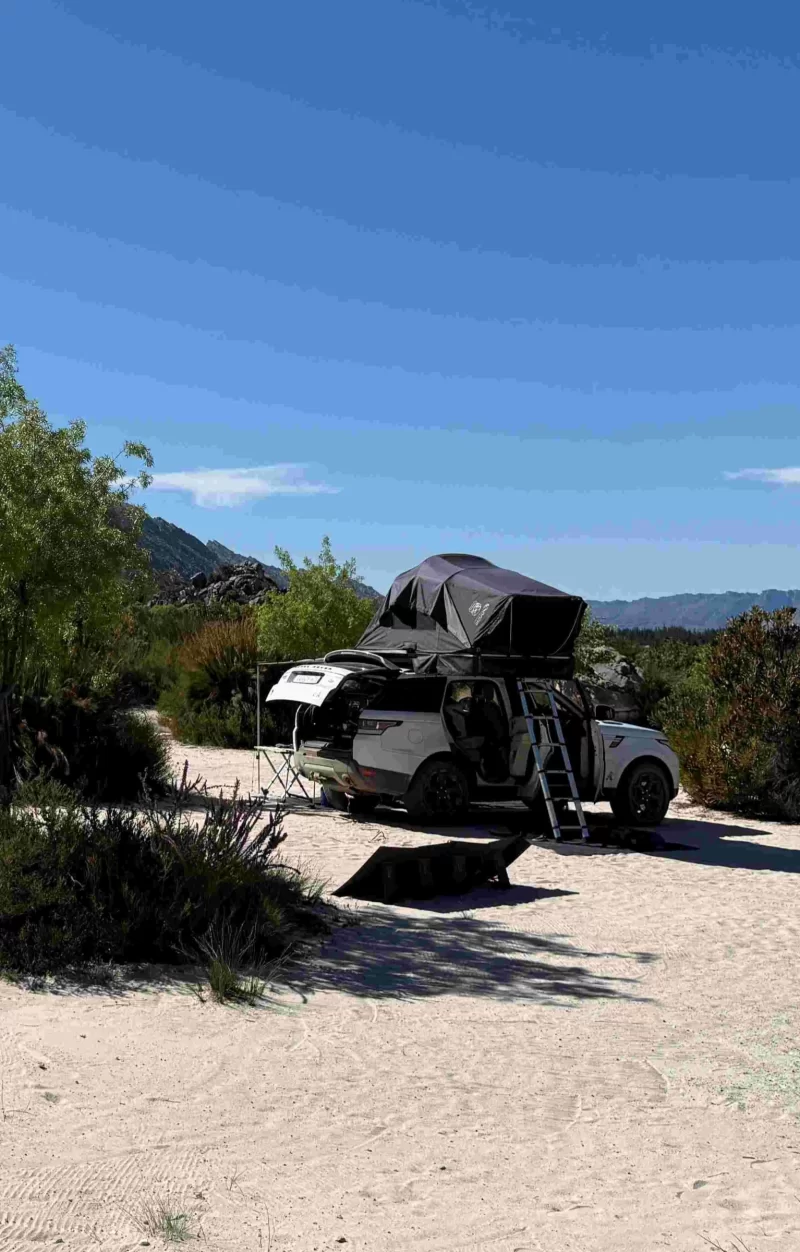
Their first trip with the rooftop tent, to Cobham in the Drakensberg, highlighted practical challenges. He said breaking camp to move the vehicle proved inconvenient, and managing food and kitchen equipment stored in ammo boxes was inefficient. By the end of the trip, he had begun reconsidering the trailer option, although he did not immediately raise this with his wife. He explored solutions to improve packing, initially considering a drawer system for the cargo area. This idea was complicated by the spare wheel beneath the load bay floor, which would become inaccessible.
Ultimately, the couple purchased a Matalian Maxi off-road trailer. Modifications were required to the vehicle’s tow hitch to accommodate the trailer’s height, and additional accessories were installed to enhance functionality.
This setup offered greater flexibility, allowing the rooftop tent to be mounted either on the vehicle or the trailer, depending on the type of trip. The trailer proved better suited to longer stays, while the vehicle-mounted tent worked for shorter overnight stops.
Attention then turned to improving off-road performance. He fitted smaller 20-inch rims, the minimum size compatible with the vehicle’s brake system, and added all-terrain tyres with a higher profile. A one-inch suspension lift kit was also installed to increase ground clearance.
The storage challenge was eventually resolved after Mark drew inspiration from an Australian design. He worked with Overland Bros in Centurion to develop a custom sliding platform system that allowed access to the spare wheel while maintaining a functional storage layout.
The system featured three aluminium drawers for tools, food and kitchen equipment, along with a sliding fridge mount, and a built-in work surface allowed for convenient use of a gas stove.
The project evolved into a broader family identity, which they named “Maditasky”, combining elements of each family member’s name. The branding included a logo featuring an acacia tree, a camp chair and a surfboard, reflecting their shared interests. The vehicle and trailer were also given nicknames, “Rangey” and “Madi”.
He acknowledged that the complexity of the Range Rover Sport’s electronics made it less suitable for extreme remote travel, but there were still many accessible destinations within its capabilities.
Mark added that they have since sold the trailer and replaced it with a Ford Ranger Wildtrak Xtra Cab fitted with an Alu-Cab ModCAP camper. The new setup, he said, offers expanded functionality for extended trips.
The couple went on a three-week overland journey through Botswana in May, marking the next chapter in their travels.
Written by
Jacqueline Herbst
Jacqui brings a style of storytelling that informs and engages readers.
READ MORE

Across Majestic India
by The Umhlanga Writer · July 12, 2026
Enduring Landmarks
by Mariska Moodley · April 15, 2026
The Cavern Chronicles
by The Umhlanga Writer · April 1, 2026